How Did the Knights of Columbus Get Their Name?
Few fraternal organizations carry a name as immediately recognizable as the Knights of Columbus. Most people have seen the name on a parish hall sign or a charity drive banner, but far fewer know the specific story behind it. The name is deliberate, loaded with historical meaning, and the product of one man’s calculated vision for what Catholic America needed in 1882.
The Founding Moment in New Haven
The Knights of Columbus was founded on March 29, 1882, in New Haven, Connecticut, by Father Michael J. McGivney, a 29-year-old Catholic priest at St. Mary’s Church. McGivney watched Catholic immigrants, many of them Irish and Italian, struggling with poverty, anti-Catholic prejudice, and social exclusion. He wanted a fraternal organization that would give Catholic men a sense of belonging, mutual financial support, and pride in their faith.
His model drew inspiration from existing fraternal orders, particularly the Masons, which offered brotherhood and insurance benefits. The Catholic Church had reservations about its members joining secret societies, so McGivney built something explicitly Catholic, open in its religious identity, and rooted in the idea that faith and civic life were inseparable.
The original name proposed for the group was “Sons of Columbus,” but that was set aside early in the founding discussions. The title the members settled on, “Knights of Columbus,” had a sharper ring and a more specific argument embedded in it.
Why Columbus? The Political Logic of the Name
Choosing Christopher Columbus was a statement, full stop. In 1882, Catholic immigrants in the United States faced the “No Irish Need Apply” era and the broader nativist claim that Catholicism was foreign to American values, a European loyalty incompatible with the American identity.
McGivney and the founding members answered that charge directly by pointing to Columbus, a Catholic explorer, as the man who literally opened the American continent to the world. The argument was clear and powerful: Catholics had been here since the very beginning of the American story. A faith accused of being un-American had a Catholic at the origin point of American history.
Columbus gave the organization a patriotic anchor. He was a figure who appeared in American schoolbooks, public monuments, and civic celebrations. Claiming him meant claiming a seat at the table of American national identity.
Why “Knights”? The Chivalric Connection
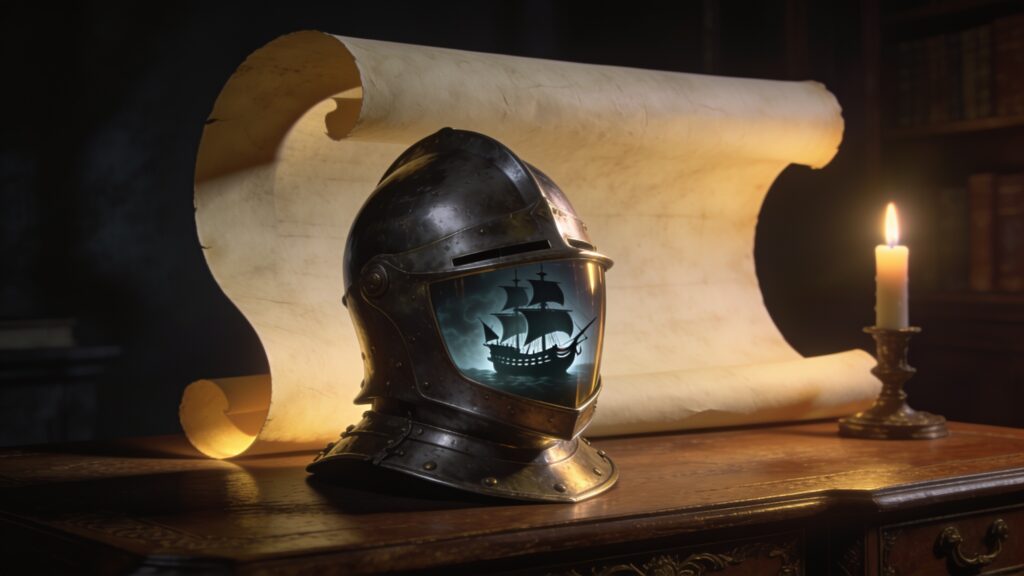
The word “Knights” carried its own weight. Medieval knighthood represented a code of conduct built around courage, loyalty, service, and the defense of the weak. For McGivney, that tradition mapped naturally onto what he wanted Catholic men to be in American society.
The title also carried dignity. In a period when Catholic immigrants were frequently dismissed as low-skilled laborers, calling members “Knights” elevated their self-image and projected a sense of honor to the wider public. A Knight of Columbus was a man of substance, a defender of his faith and his community.
The four core principles the organization built its identity around align directly with the chivalric ideal.
- Charity: service to others in material and spiritual need
- Unity: brotherhood among Catholic men across ethnic lines
- Fraternity: mutual aid, especially financial support for families of deceased members
- Patriotism: active civic engagement and loyalty to the United States
Key Facts About the Name and Founding
| Detail | Information |
|---|---|
| Founded | March 29, 1882 |
| Location | New Haven, Connecticut |
| Founder | Father Michael J. McGivney |
| Name chosen over | “Sons of Columbus” |
| Columbus as symbol | First Catholic associated with the Americas |
| “Knights” refers to | Medieval chivalric tradition of service and honor |
| First Supreme Knight | James T. Mullen |
The Name Survives Internal Debate
The choice of Columbus drew some debate even at the founding. A few members preferred naming the organization after St. Patrick or another directly Catholic patron. McGivney favored Columbus because the saint-based names felt too ethnically specific. At that point, Irish Catholics and Italian Catholics sometimes had friction between them, and McGivney wanted an organization that crossed those lines.
Columbus worked precisely because he belonged to no single immigrant group. He was Genoese, but his voyage was backed by Spain, and his legacy was claimed by all of Catholic Europe and, by extension, Catholic America. The name invited every Catholic man regardless of his ancestry.
Columbus in the Broader Culture of 1882
It helps to understand how Columbus looked in the 1880s. The 400th anniversary of his 1492 voyage was a decade away, and American cities were actively debating how to honor him. The 1893 World’s Columbian Exposition in Chicago would be built entirely around that anniversary. Columbus Day celebrations were already common in Catholic communities before they became a federal holiday in 1937.
The founding members were picking a name at a moment when Columbus was rising in public esteem. The timing amplified the message. The Knights were positioning themselves within a cultural wave, a smart move by men who understood how symbols work.
What the Name Has Come to Mean
Today the Knights of Columbus has over 2 million members across the world and is the largest Catholic fraternal organization in existence. The name has outlasted every controversy around Columbus himself, and the organization has periodically addressed those debates directly rather than quietly.
The name still carries the original argument: that Catholic faith and American identity are compatible, that service and brotherhood are central to both, and that Catholic men have a legacy worth claiming and defending.

Key Takeaways
The Knights of Columbus got their name from two deliberate choices made by Father McGivney and the founding members in 1882. “Columbus” answered nativist claims by placing a Catholic figure at the origin of American history. “Knights” projected dignity, purpose, and a code of conduct rooted in the chivalric tradition of service. Together the two words formed a statement about who Catholic Americans were and what they stood for.
If you want to understand the organization’s mission, start with the name. Every word in it was chosen on purpose.